

ANNAPOLIS VALLEY: WHY NOVA SCOTIA IS PRODUCING SOME OF CANADA’S MOST EXCITING SPARKLING WINES
If you ask the average Canadian where our best wine comes from, you'll probably hear the same answers.
Niagara.
The Okanagan.
Maybe Prince Edward County.
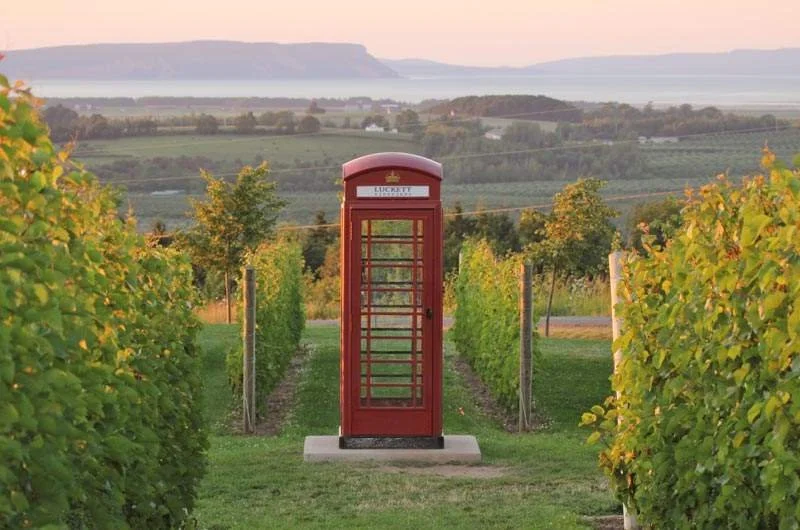
But tucked between the Bay of Fundy and the North Mountain in Nova Scotia is a wine region that's quietly rewriting what Canadian wine can be.
The Annapolis Valley isn't trying to be another Napa or Burgundy. It doesn't have to be. What makes this region remarkable is that it has embraced its own identity—one built on cool temperatures, ocean influence, and wines that simply couldn't be made anywhere else.
If you haven't explored the Annapolis Valley yet, now is the time.
A Valley Shaped by the Ocean
The Annapolis Valley stretches roughly 120 kilometres through western Nova Scotia, but its secret weapon isn't the land—it's the water.
Bordered by the Bay of Fundy, home to the highest tides in the world, the region experiences a unique maritime climate. Those enormous tides help moderate temperatures throughout the growing season, protecting vineyards from extreme weather and allowing grapes to ripen slowly.
Cool-climate regions like this often produce wines with bright acidity, lower alcohol, and incredible precision. Rather than chasing richness or power, Annapolis Valley wines are defined by freshness, elegance, and balance.
It's a style that feels increasingly relevant as wine drinkers seek lighter, food-friendly wines with a real sense of place.
Nova Scotia's Sparkling Wine Moment
If there's one category that has put the Annapolis Valley on the international wine map, it's sparkling wine.
The region's naturally high acidity makes it exceptionally well suited to traditional method sparkling wines—the same labour-intensive process used in Champagne.
Long growing seasons help grapes retain freshness while developing delicate flavours, creating wines with crisp citrus, green apple, brioche, and mineral notes. The result is sparkling wine that's vibrant, complex, and unmistakably Nova Scotian.
Many Canadian wine professionals now consider Nova Scotia one of the country's premier sparkling wine regions, and after tasting a few bottles, it's easy to understand why.
Meet Tidal Bay: Nova Scotia's Signature Wine
Most great wine regions eventually become known for a style that captures their identity.
For Nova Scotia, that's Tidal Bay.
Introduced in 2012, Tidal Bay is North America's first regulated regional white wine appellation. Rather than being made from a single grape, it's a carefully defined blend created exclusively from Nova Scotia-grown grapes and produced according to strict quality standards.
The goal wasn't to invent a marketing slogan.
It was to create a wine that genuinely reflects the province's climate and character.
Tidal Bay wines are typically aromatic, dry, lively, and bursting with citrus, orchard fruit, floral notes, and refreshing acidity. They're designed to pair beautifully with Atlantic seafood, making them one of the most food-friendly wines produced anywhere in Canada.
It's a reminder that sometimes a region's greatest strength isn't copying the rest of the world—it's creating something entirely its own.
More Than Sparkling
While sparkling wine may be the region's calling card, it's far from the whole story.
The Annapolis Valley also produces outstanding Riesling, Chardonnay, Gamay, Pinot Noir, L'Acadie Blanc, and several aromatic white varieties that thrive in the maritime climate.
Many wineries are experimenting with hybrid grapes alongside traditional vinifera, embracing the reality of farming in a cool climate rather than fighting against it.
That willingness to innovate has become one of the region's defining characteristics.
A Wine Region That Feels Personal
One of my favourite things about the Annapolis Valley isn't found in the vineyards.
It's the people.
Many wineries are family-owned, deeply connected to their communities, and refreshingly approachable. You're just as likely to meet the owner or winemaker in the tasting room as you are a hospitality team.
Conversations tend to be about farming, weather, tides, and the unique challenges of growing grapes on Canada's East Coast—not prestige or points.
There's an authenticity here that's becoming harder to find in many of the world's larger wine regions.
Why the Annapolis Valley Matters
Canadian wine has spent decades trying to prove it belongs on the world stage.
Regions like the Annapolis Valley remind us that our greatest strength isn't trying to replicate famous European or American styles.
It's embracing what makes Canada different.
Cool climates.
Ocean influence.
Innovation.
A willingness to experiment.
The wines coming out of Nova Scotia don't succeed despite these conditions—they succeed because of them.
Planning a Visit
The Annapolis Valley is one of Canada's most rewarding wine destinations, especially if you enjoy taking your time.
A day here might include a leisurely drive through vineyard-lined countryside, a stop at a handful of boutique wineries, lunch featuring local seafood, and a glass of traditional method sparkling overlooking the vines.
Unlike some larger wine regions, there's very little rush. The experience feels relaxed, welcoming, and genuinely connected to the landscape.
If you're building a Canadian wine bucket list, the Annapolis Valley deserves a place near the top.
The Bottom Line
The Annapolis Valley isn't Canada's biggest wine region, and it probably never will be.
What it offers is something more compelling: wines with unmistakable character, producers who are pushing Canadian wine forward, and a sense of place that's impossible to imitate.
Whether you're discovering a bottle of Tidal Bay for the first time or raising a glass of world-class Nova Scotia sparkling wine, one thing becomes clear very quickly.
The future of Canadian wine isn't confined to one province or one region.
It's being written from coast to coast—and the Annapolis Valley is one of its most exciting chapters.